Advanced surface performance without melting
Laser Assisted Cold Spray applies advanced materials in solid state, improving bonding and performance while reducing thermal distortion, cracking and material degradation.
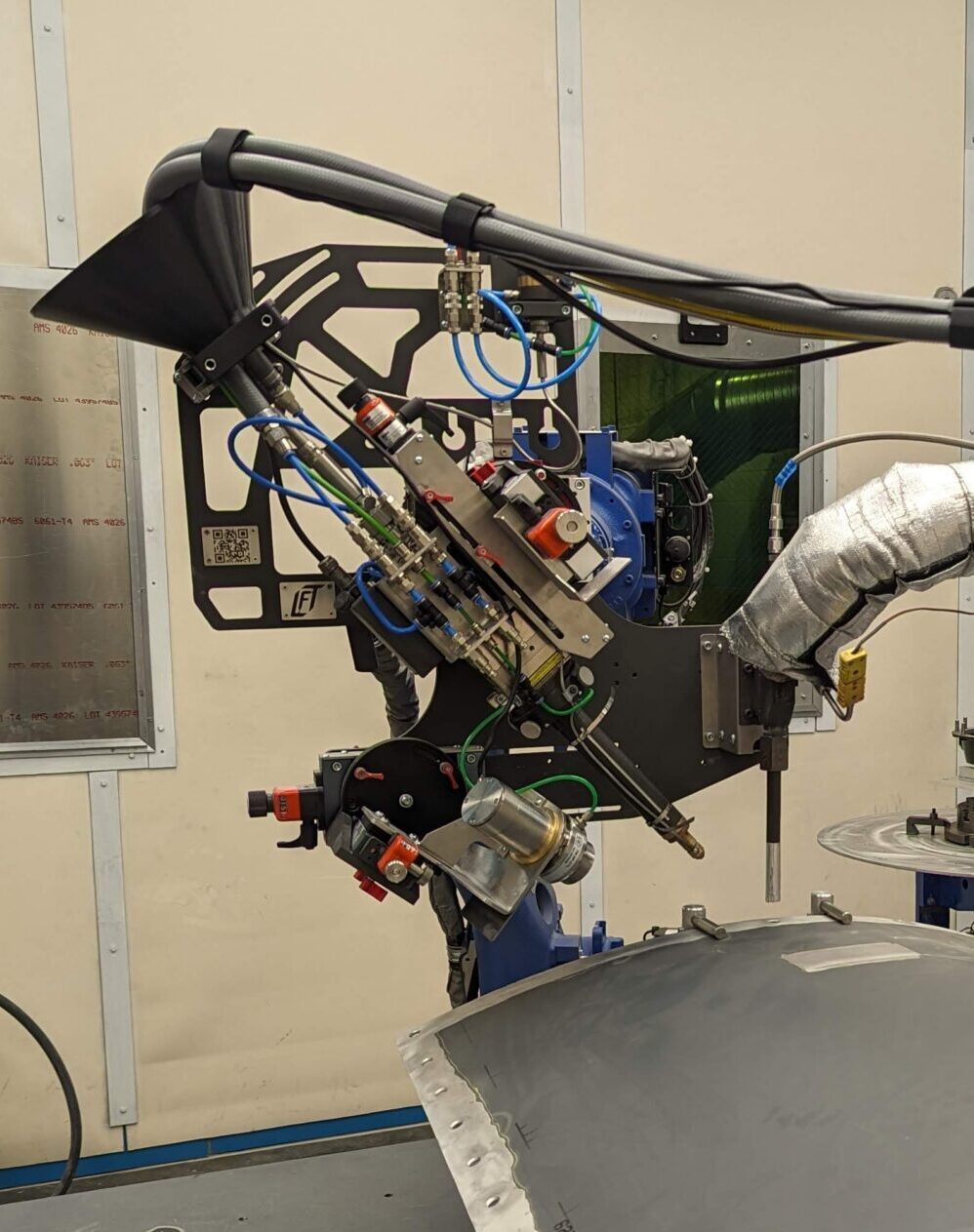
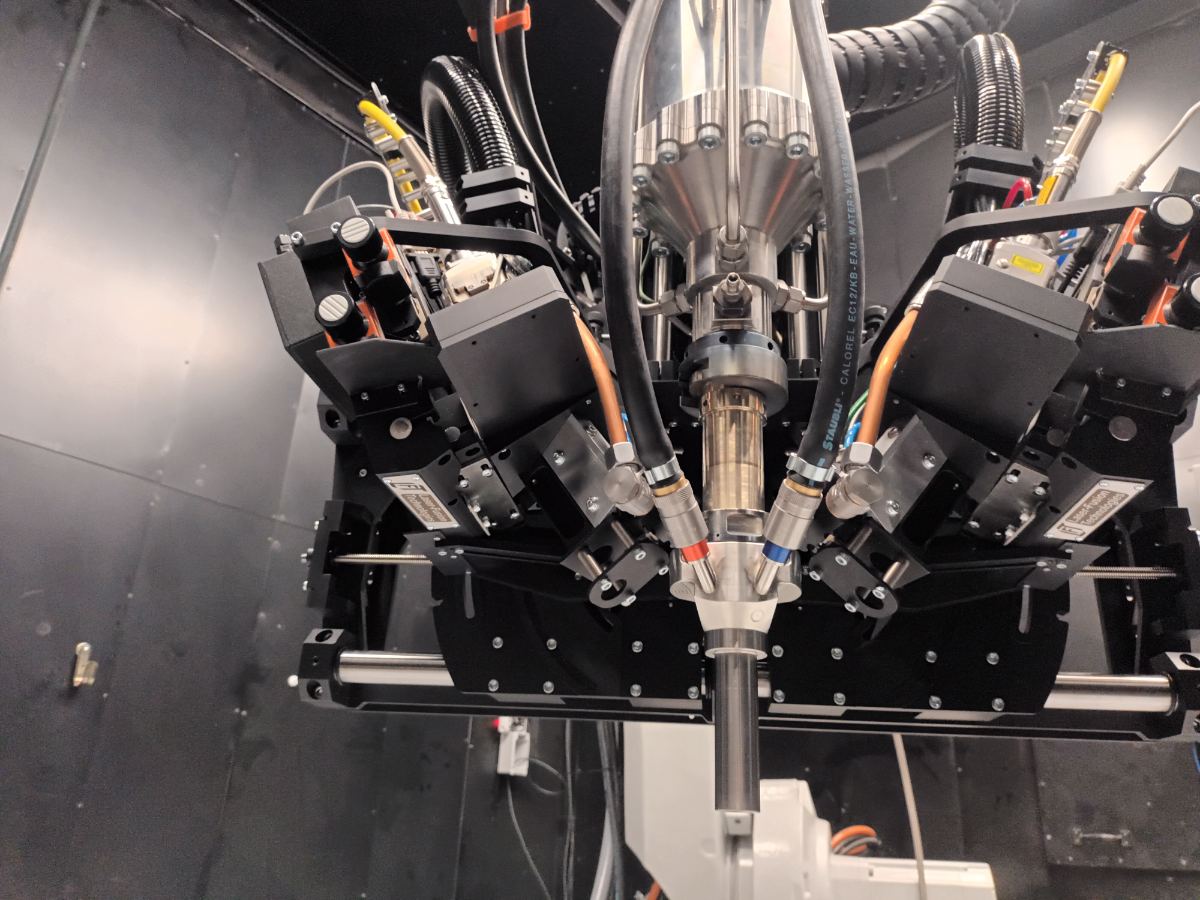
LACS DEPOSITION HEAD · LFT PROCESS CELL
Why existing methods fall short
MELTING-BASED
Directed Energy Deposition & thermal processes
- High heat input and thermal stress
- Distortion risk in high-value components
- Possible material degradation
- Energy-intensive operation
KINETIC-ONLY
Standard cold spray
- Limited capability with high-hardness materials
- Bonding can be primarily mechanical
- Best performance often requires helium
- Bond strength sensitive to operating conditions
One process across the full material range
What LACS does differently
Solid-state deposition, locally activated by laser. Six characteristics set LACS apart from melting-based and kinetic-only processes — each working together to build dense, well-bonded coatings without ever melting the feedstock.
High-speed particle deposition
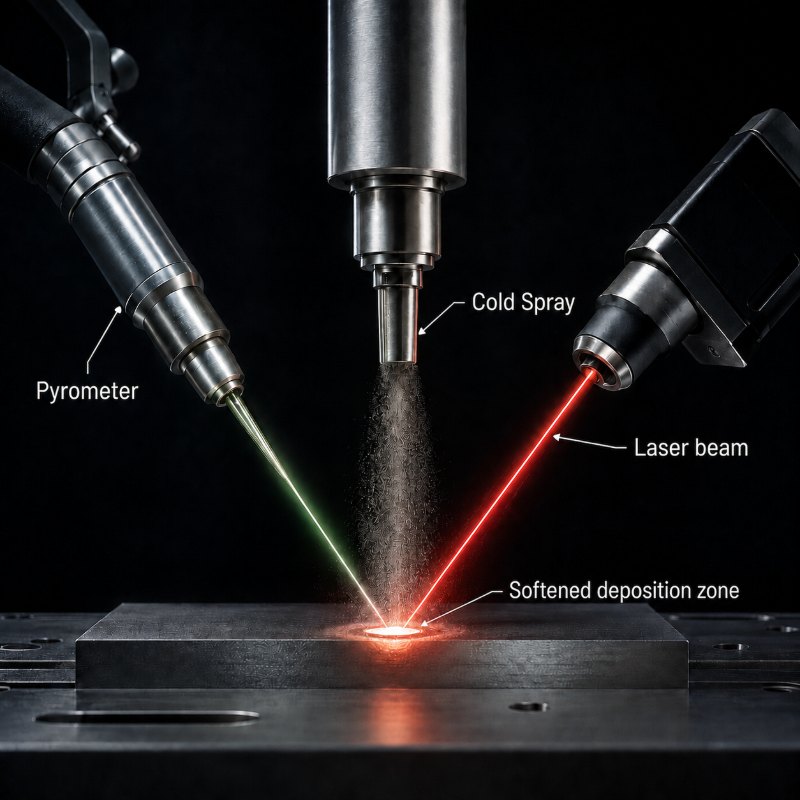
Powder is accelerated through a supersonic nozzle to hundreds of metres per second. Particles arrive with enough kinetic energy to deform and bond on impact, building up a dense, well-adhered layer — without ever reaching a molten state.
Laser-induced thermal activation
A precisely controlled laser locally softens the impact zone at the moment of deposition. This activation lowers the velocity threshold needed for bonding and unlocks materials kinetic energy alone cannot deposit — without flooding the part with heat.
Stronger bonding
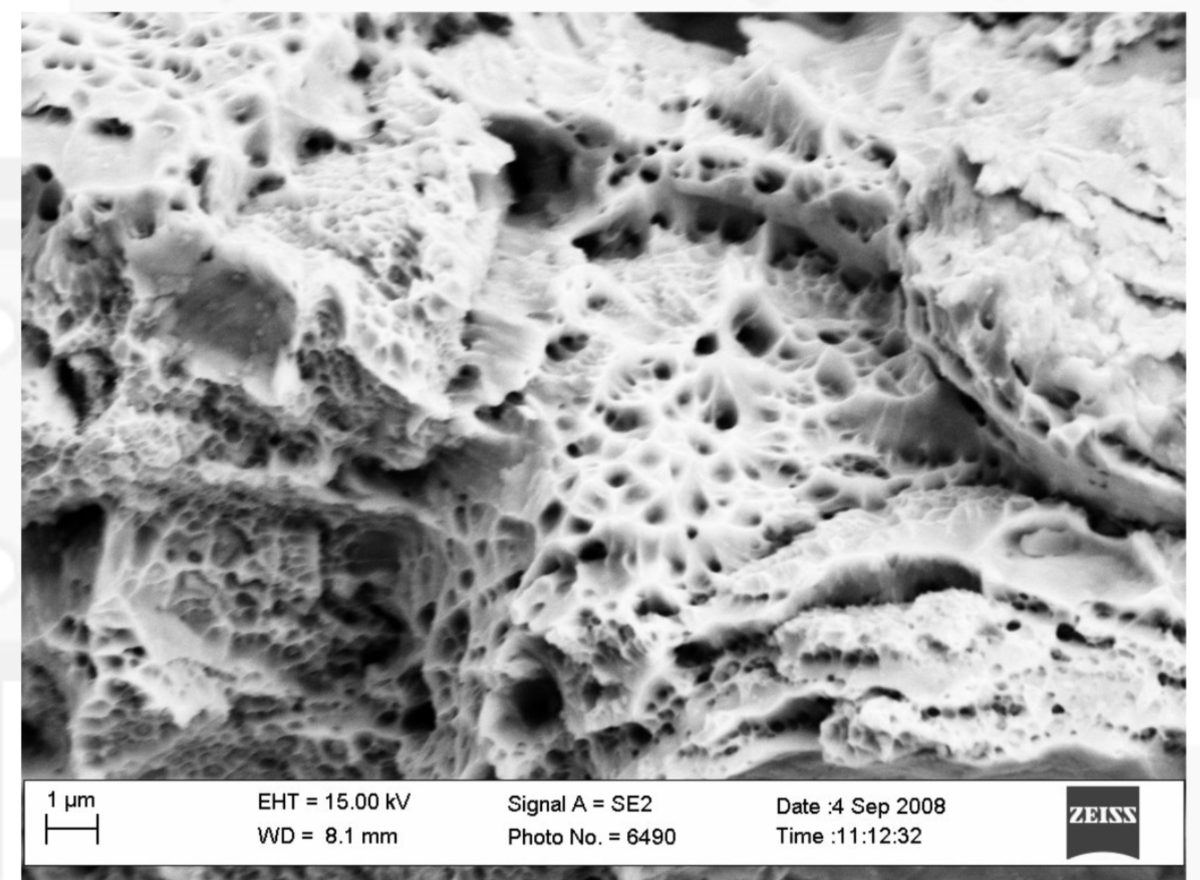
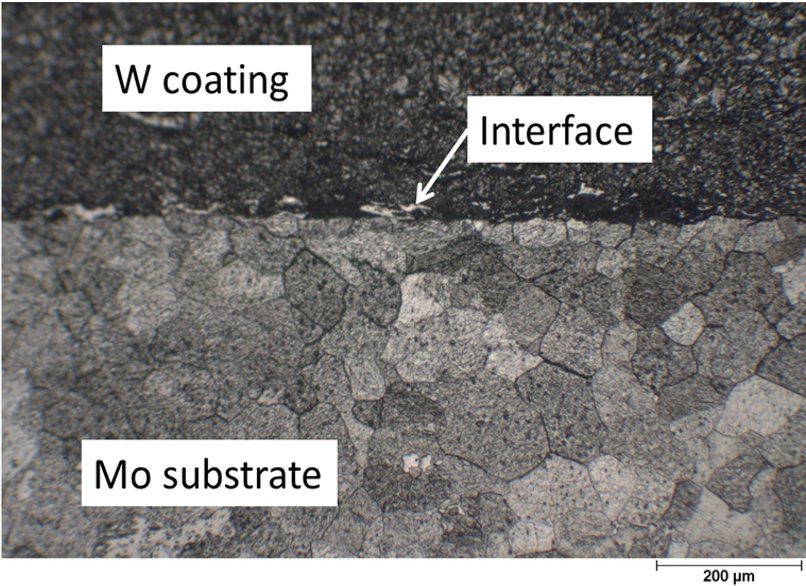
Combining kinetic impact with localised laser heating produces genuine metallurgical bonding rather than purely mechanical interlock. The result is higher adhesion strength and more consistent coating-to-substrate integrity.
Minimal thermal impact
Heat is confined to a thin layer at the point of deposition, so the bulk of the component stays close to ambient temperature. Distortion, residual stress and heat-affected zones are kept to a minimum — even on finished, high-value parts.
No melting of deposited materials
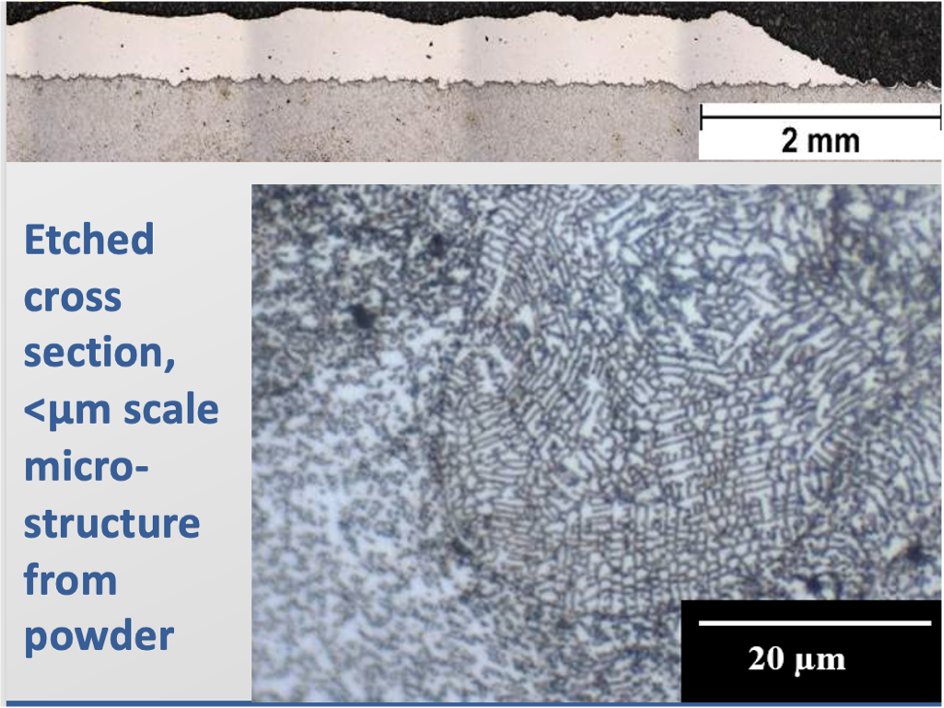
The feedstock is never melted, so its original microstructure, grain size and phase composition survive into the finished coating. Fine carbides and engineered powders reach the surface intact and retain the properties they were designed for.
Wider material compatibility
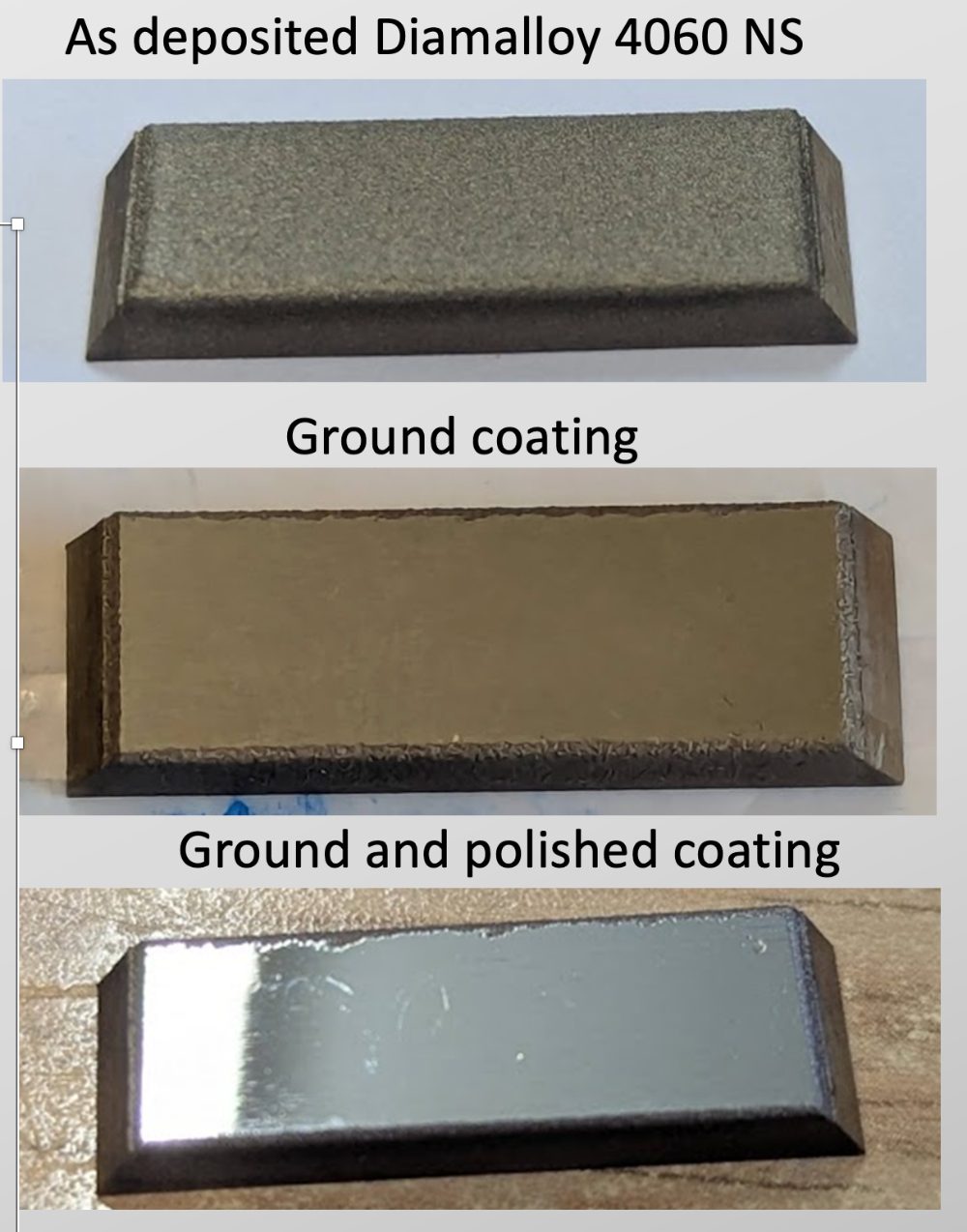
Laser activation extends the process well beyond standard cold spray — covering carbides, tungsten, Stellite and other hard or temperature-sensitive systems that melting-based and kinetic-only methods struggle to deposit reliably.
Why avoiding melting matters
Less distortion
Geometry and tolerances are preserved on finished, high-value components.
Lower cracking risk
Solid-state bonding avoids solidification cracking and residual stress.
Retained microstructure
The deposited material keeps the structure that gives it its performance.
Sub-micron particles preserved
Fine carbides and engineered powders survive deposition intact.
Temperature-sensitive systems
Better compatibility with materials that degrade under heat.
Precision applications
Improved potential where micron-scale stability is mission-critical.
Engineered as an integrated system
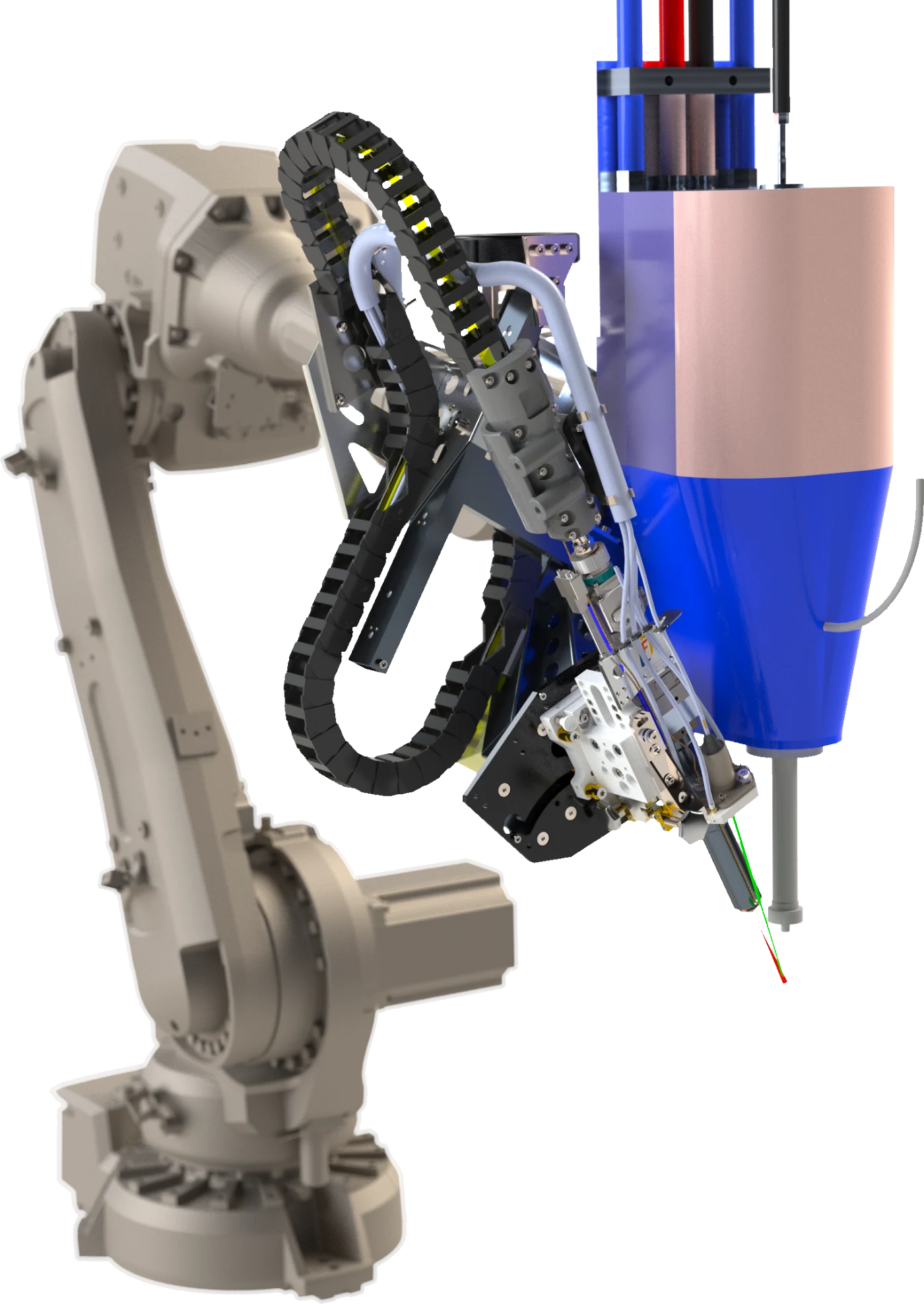
Cold spray, laser activation, powder delivery and motion control are engineered together into a single deposition platform — each subsystem designed around the others.

01 · DEPOSITION HEAD
Combined cold-spray nozzle and laser delivery in one head.
02 · POWDER & GAS DELIVERY
Metered powder feed and gas conditioning for stable supersonic flow.
03 · LASER OPTICS
Beam shaping and alignment for precise thermal activation at impact.
04 · MOTION INTEGRATION
Robot-mounted frame coordinating head, optics and component geometry.
What this enables
Wear-resistant coatings
Corrosion-resistant coatings
Extreme wear protection
Dry lubrication
Repair & restoration
Material build-up
Functional & magnetic coatings
Difficult material systems
Grounded in demonstrated capability
- Cambridge University developed technologyBuilt on senior laser-based manufacturing and materials science expertise.
- Patented approachA defensible process combining cold spray with laser activation.
- Demonstrated material systemsWC-Co, tungsten, Stellite 6™ and titanium — with measured hardness, adhesion and microstructure retention.
Talk to us about your application or investment interest
Bring a component, an operating environment, a failure mode or an application thesis. We’ll explore whether LACS can change the economics of the problem and what evidence would be needed to move it forward.
APPLICATION TRIALS
PARTNERSHIPS
INVESTMENT
TECHNICAL COLLABORATION
Where to go from here
Applications
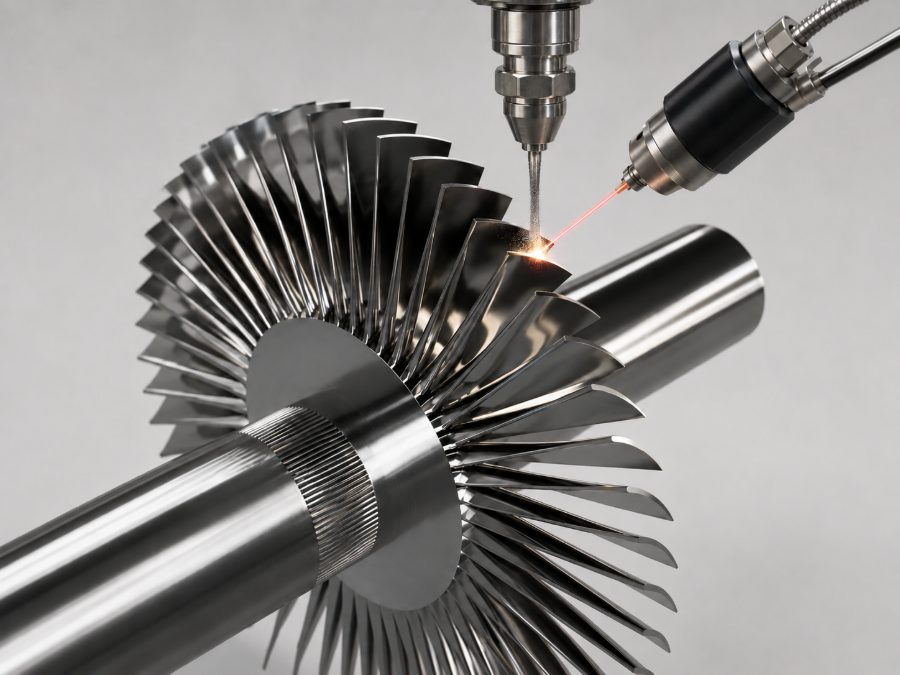
Where surface performance becomes industrial value — marine, turbines, brake discs and space systems.
Materials
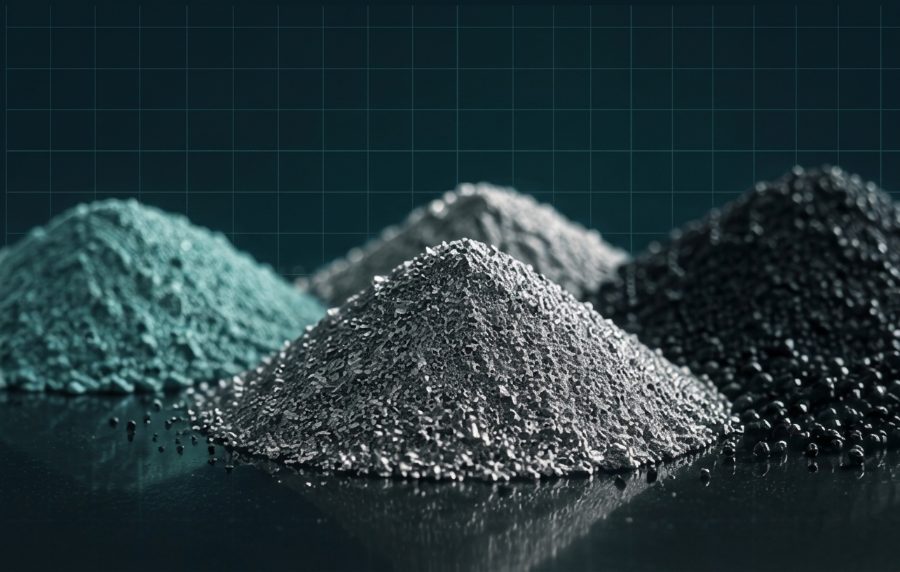
The hard, carbide and functional material systems LACS can deposit — with measured performance.

Partnerships
How LFT works with partners to prove, scale and co-develop surface-performance solutions.